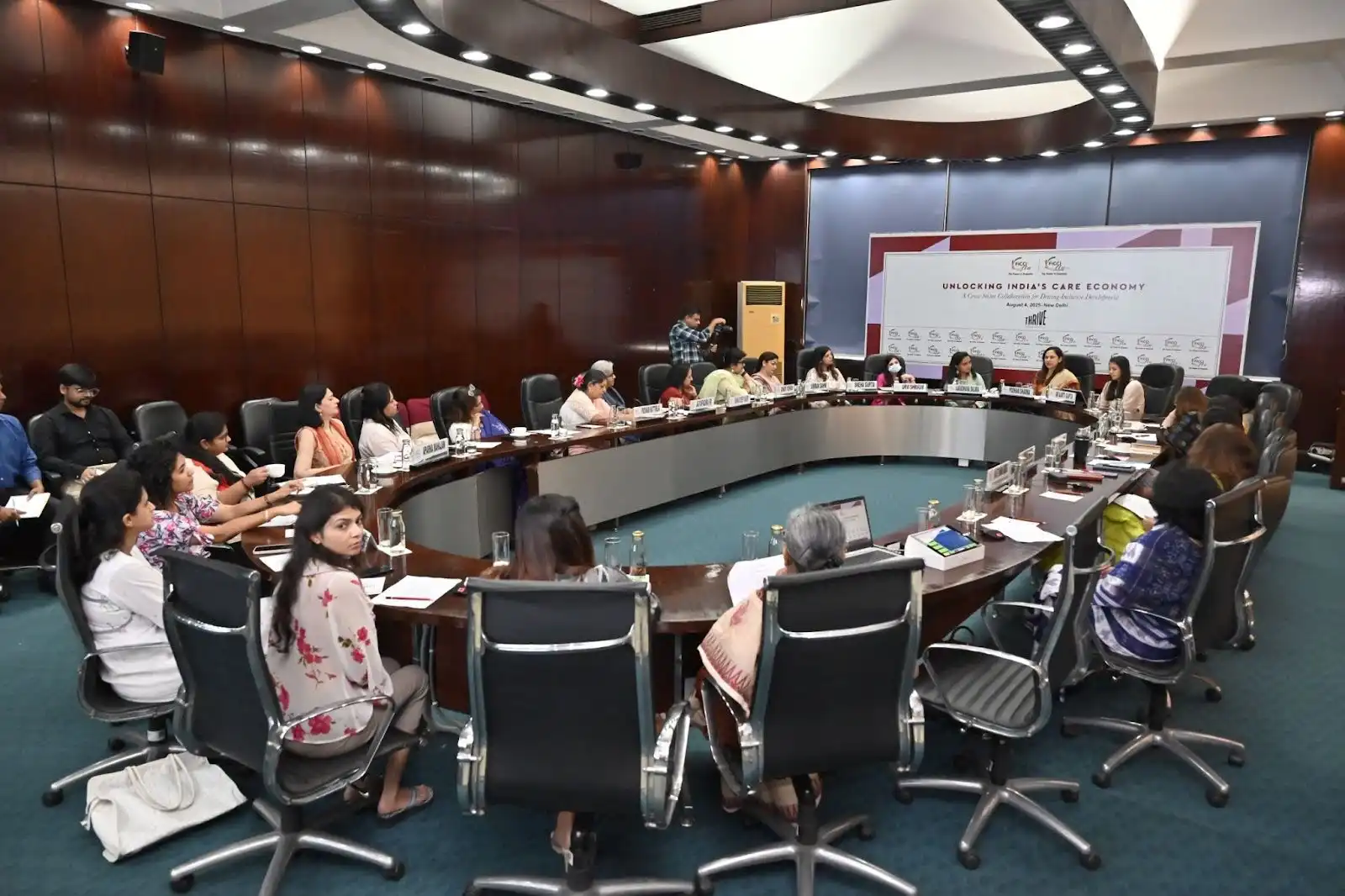


FICCI FLO, under the leadership of the 42nd President, Ms. Poonam Sharma, in collaboration with YFLO Delhi, hosted a high-level roundtable on “Unlocking India’s Care Economy: A Cross-Sector Collaboration For Driving Inclusive Development,” focusing on exploring ways to strengthen India’s care economy and leverage it for inclusive development.
The care economy, including childcare, eldercare, care for persons with disabilities, and unpaid care work, has been historically underestimated despite its crucial role in social well-being and economic growth. Around 748 million people globally are out of the labour force due to unpaid care responsibilities, and most of them are women.
Held at the Council Room, FICCI Federation House, New Delhi, the session brought together stakeholders from government, industry, academia, philanthropy, and civil society to acknowledge unpaid care work and invest in care infrastructure. The powerful session was initiated with a welcome address by Ms. Poonam Sharma, National President, FICCI FLO, who emphasized the importance of recognizing care work as an integral part of India’s economic and social infrastructure.
Ms. Aarti Gupta, Head of FLO’s National Policy & Advocacy Vertical, and Ms. Urvi Shriram, Committee Member, YFLO Delhi, served as the day chairs to make this event possible and ensured the best roundtable discussion among the attendees and speakers. Ms. Aaradhana Dalmia, Chairperson, YFLO Delhi, outlined the objectives of the roundtable to translate insights from previous deliberations into tangible policy pathways and partnerships.
Key Discussions
The roundtable featured in-depth dialogues across four thematic areas, each moderated by FLO and YFLO Delhi members:
- Poonam Muttreja, executive director at Population Foundation of India, and Mr. Amit Shukla, founder at EasyGov, discussed integrating care into India’s social and economic policy frameworks and leveraging technology for inclusive welfare delivery. Recognising unpaid care work formally (e.g., in national accounting) is essential for policy visibility and resource allocation.
- Dr. Shubnum Singh, Ms. Simar Kaur, and Ms. Anuradha Das Mathur underscored the need for structured skilling, certification, and dignified employment opportunities, particularly for women in childcare, healthcare, and eldercare sectors.
- Ms. Chavi Vohra, Ms. Puja Marwaha, and Ms. Shaveta Sharma Kukreja highlighted policy and community-based solutions to expand access to quality childcare and early learning, which is essential to enabling women’s participation in the workforce.
- Dr. Nisha Dhawan, Ms. Jayapadma RV, and Dr. Abha Jaiswal shared models for multi-stakeholder collaboration across government, philanthropy, technology, and civil society to deliver sustainable, scalable care interventions. Sustainable care systems require cross-sector collaboration as no single actor (government or business) can act alone.
Impact
The roundtable concluded with closing remarks and a vote of thanks from the conveners. Participants agreed on continuing cross-sector engagement through FLO’s Policy and Advocacy vertical to translate recommendations into collaborations and policy advocacy efforts.
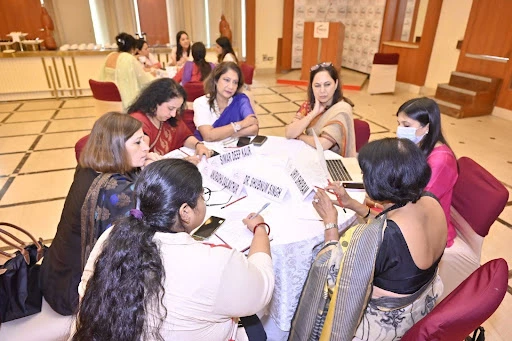
Then, members and guests connected over tea and coffee, fostering connections among stakeholders committed to advancing India’s care economy. The Unlocking India’s Care Economy event showcases FICCI FLO and YFLO Delhi’s efforts towards elevating the care economy onto the national policy agenda.