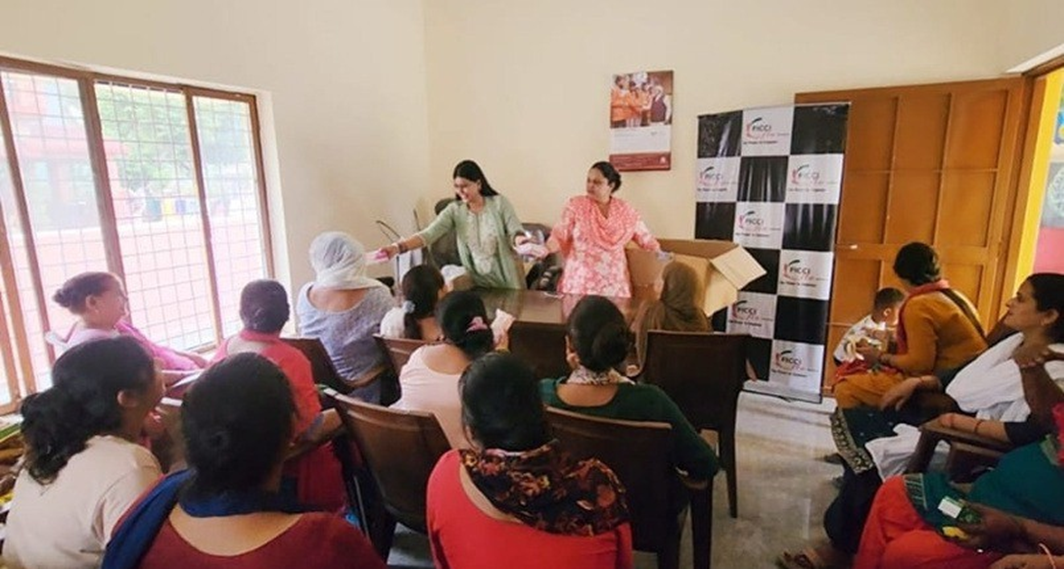
FLO Uttarakhand, under the leadership of Chairperson Dr. Geeta Khanna, successfully organized the ‘Badhte Kadam,’ a capacity-building workshop for women under its urban skilling initiative. FLO’s Urban Skilling Initiative focused on building employability, entrepreneurial aptitude, and self-reliance among underprivileged urban women. The session was chaired by Dr. Maansi Rastogi, Urban Skilling Initiative Head, and saw the participation of 32 women from 3 self-help groups.
The event was held at Panchayat Ghar, Gram Chauki, Pondha, Dehradun. The objective of the program was to empower women from low-income backgrounds by providing them with relevant market skills, life skills, and awareness of entrepreneurship. These women often face significant challenges due to limited education, social stigma, and lack of confidence.
The initiative sought to bridge this gap through structured, hands-on learning and mentorship. The three-hour modular workshop introduced participants to trade-based skills such as organic dhoop making using floral waste from temples, organic hawan cup creation, mental wellness techniques, and tote bag making.
In addition, the women were trained in soft skills like communication, hygiene, time management, and financial literacy — essential tools for success in business and day-to-day life. The workshop also focused on entrepreneurship and the importance of SHG-based collectives. Women were educated on starting their own ventures, upgrading their skills for income generation, and linking with potential markets and government support systems.
As an outcome of the session, different trades have now been identified for these 32 participants for further mentorship and business scaling. Post-training, FLO supported them with placement opportunities, market linkage, and facilitation of government schemes to help them transition into self-sustaining livelihoods.
The program was made possible with the support of Trikon Society and the National Governing Body Member & Past Chairperson FLO Dr Neha Sharma, who played a vital role in identifying the location and mobilizing the women. As a part of the initiative, sanitary pads were also distributed, and all participants were served healthy refreshments.