
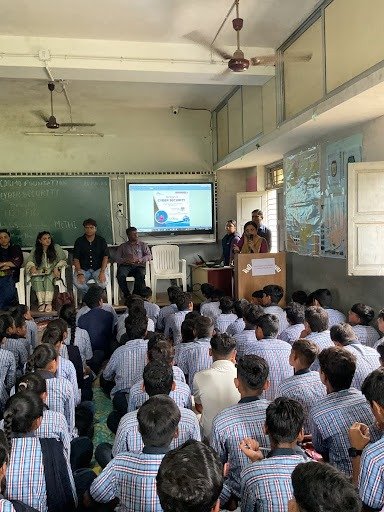




FLO Vadodara, under the leadership of Chairperson Shivani P. Patel, organised an insightful “Cyber Security Awareness Session” to empower students of Pujya Shree Jashuba Swami Vidyamandir, Methi Village, Taluka Karjan, by equipping them with the necessary knowledge and tools to stay secure in the digital world. This session is a part of the Digital Literacy initiative, which empowers women by providing them with basic digital skills to thrive in a technology-driven economy.
The session was led by Mr. Mayur Bhusavalkar, a well-known cybersecurity expert. The school was approached through the Cosmo Foundation. The students were engaged with practical insights, live demonstrations and safety tips on how to protect themselves in the online space. Students got practical knowledge on how to secure their devices, data and online presence through this awareness session.
Key Takeaways for Students
- Safer Communication
- Silence WhatsApp calls from unknown numbers.
- Always answer a video call with your face covered initially, even if it’s from a known contact.
- Data Security & Privacy
- “Delete” doesn’t mean erase—files can still be retrieved.
- Factory reset old phones before discarding; load them with large dummy files (songs/videos) and delete them 3 times to erase data permanently.
- Turn off Media Auto-Download on WhatsApp to avoid downloading viruses hidden in photos.
- Restrict Privacy Settings
- Last Seen/Online: Nobody
- Profile Picture, About, Link & Status: My Contacts only
- Enable Two-Step Verification and use a strong 6-digit passcode.
- Add an email address for backup security.
- Cyber Hygiene
- Use ##002# code to remove call-forwarding or hidden listeners.
- Check if your email is compromised via haveibeenpwned.com.
- Use strong passwords (15+ characters with letters, numbers & symbols).
- Never download or open suspicious .apk files.
- Open unknown links in incognito mode only after copying and pasting.
- Cybercrime Awareness
- Report cybercrimes immediately at 1930 or cybercrime.gov.in. Acting within 1–3 hours can help stall and retrieve lost money.
- Use stopncii.org to permanently delete and block the circulation of explicit or abusive videos/photos online.
- Cyber Rakshabandhan Message: Most cybercrimes stem from English language tricks, fear, greed and lack of pausing to think.
- Healthy Digital Habits
- Limit phone use to 30–35 minutes at a time; practising this for 21 days helps build sustainable habits.
- Many students were surprised to learn that deleted data is retrievable and showed keen interest in knowing how to truly erase personal information.
- Students actively engaged in live demonstrations (WhatsApp privacy, password strength checks, and email breach checks).
- Immediate behavioural shift noted— students promised to set stronger passcodes, limit phone usage, and help peers avoid online fraud.
- Teachers appreciated the child-friendly explanations and requested follow-up workshops on advanced topics like digital footprints and ethical online behaviour.
The session successfully benefited 225 young students by equipping them with digital literacy and cybersecurity skills and knowledge. The impact is expected to ripple further as these students share their learnings with their families and communities, contributing to the creation of a more cyber-aware generation.